Unless you have raised it yourself, it is unlikely that you will find a Tennessee Walking Horse without ANY training. Most of these horses are started at birth, and continue their training through their yearling and two year old stages, to be backed and fully trained by the time they are three years old. They mature quite early and live a long time. 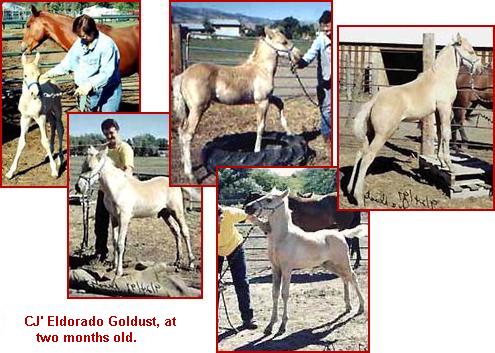
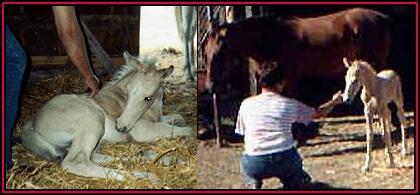
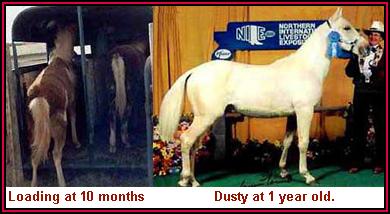
Most are halter broken by the time they are weaned. They are handled, vetted, visited by the farrier, taught to stand for grooming and clipping, and taught to load, all in their first year.
In their second year, they are lounged and driven, and prepared for saddling.
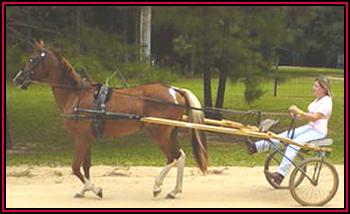
Two year old Tabasco of Southern Tradition Tennessee Walking Horses.
By the time they are ready to ride, they are very accustomed to being around people, and most do not object to being saddled. They are familiar with people, and enjoy their company, and have been made bridle-wise during their driving period.
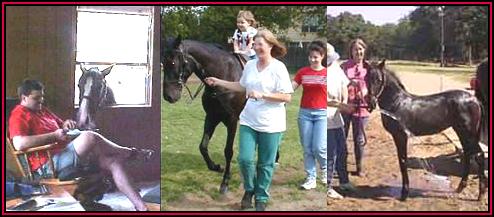
The family horses of McDodi Farms
After being saddled, the time-honored way to finish a Walking Horse is to ride it at a flat walk until it is has been ridden for a total of around a hundred miles. Often the horse will be ridden down the same stretch of lane and back, over and over again, so it does not expect to be going anywhere in particular, and will relax into sedate, rhythmic way of going. By keeping it in first gear, you will develop the loose, easy-going gait that will progress gradually into a running walk.
Not until both the flat walk and the running walk are firmly established in the young horse, is it asked to canter. Because it has not been hurried along while under saddle, the canter will also be a slow, smooth, comfortable gait, and not a mad dash to reach a particular destination.
In answer to a often-asked question, the Tennessee Walking Horse is descended from some of the finest racing blood ever developed in Thoroughbreds, Standardbreds and Hambletonian Trotters, so yes, - - if you ask it to, it can and WILL gallop.